

Is real leather horse tack worth it over synthetic?
Real leather horse tack is worth it over synthetic when you want its feel, traditional finish, and the option to have suitable leather parts repaired. Synthetic tack is the better choice when easy cleanup matters more than those benefits. Neither material makes up for poor fit, weak stitching, or worn hardware, so your 2026 buying decision should start with the actual piece—not the label.
- Is real leather horse tack worth it over synthetic? Yes for leather feel and suitable repairs; not for every rider.
- Synthetic horse tack suits riders who prioritize easy cleanup, but construction and care instructions still matter.
- Choose fit and sound hardware before material, especially for saddles, bridles, and reins.
- The Good Shepherd Ranch Clothing Co suits ranch families shopping western apparel and horse tack together.
Why this matters
A bridle that looks right on the tack-room wall still has to work on your horse. Material is part of that decision, but it is not the whole decision. You need the right adjustment, sound connections, and a care routine you will actually follow.
For a broader equipment checklist, start with the horse tack guide for horse trainers. Then compare leather and synthetic versions of the same kind of tack, rather than treating every leather item as better than every synthetic one.
Is real leather horse tack worth it over synthetic?
Yes, if leather's feel and serviceability matter to you enough to keep up with its care. No, if your main goal is straightforward cleaning and you do not want leather maintenance added to barn chores. Either choice still needs regular inspection.
Synthetic is an umbrella term, not a single material. Coated webbing, exposed webbing, and other synthetic constructions do not all feel, clean, or wear alike. Leather varies too: the hide, finish, stitching, and hardware all affect the finished piece.
| Option | Best for | Main benefit | Main drawback | What to check |
|---|---|---|---|---|
| Real leather tack | Riders who prefer leather feel and traditional western styling | Suitable components can be assessed for repair by a saddler | Needs appropriate cleaning, drying, and conditioning | Cracks, stiffness, stretched holes, stitching, and hardware |
| Synthetic tack | Riders who prioritize straightforward cleanup | Many designs clean without leather conditioning | Care and repair options depend on the construction | Fraying, coating damage, attachment points, and hardware |
The useful comparison is between two sound, correctly fitted pieces. A neglected leather headstall is not an upgrade over a well-made synthetic headstall. A damaged synthetic strap is not acceptable just because it washes easily.
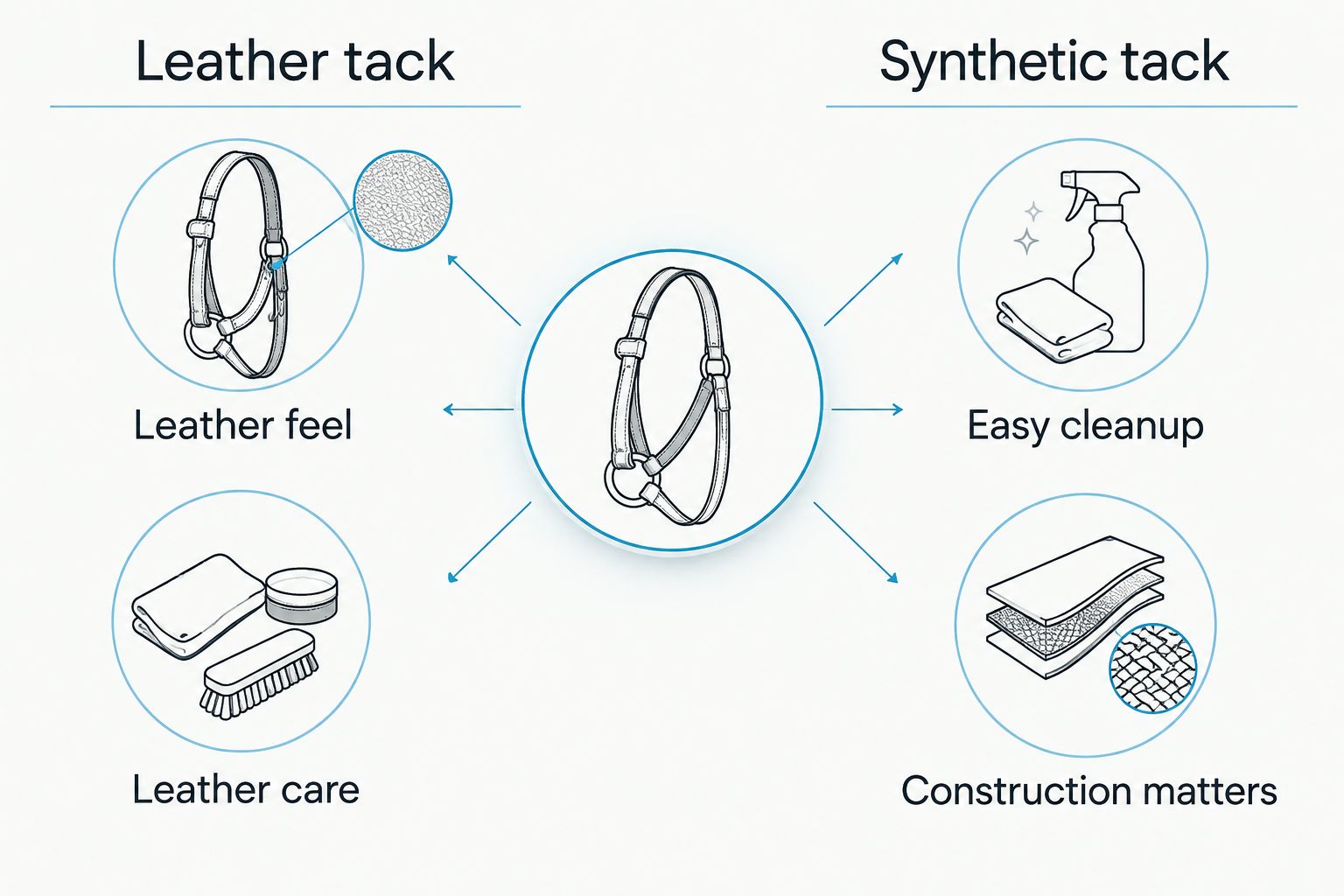
Real leather tack: best for feel and traditional styling
Leather earns its place when you like how a particular rein or strap handles. That is a hands-on judgment. Pick up the piece, work its adjustments, and check the parts that will touch your horse.
Do not assume new leather must feel a certain way to be good. Finish and construction affect flexibility. Likewise, softness alone does not prove strength or quality.
Where leather makes sense
- Reins: Choose leather when you prefer the feel of that particular pair in your hands. Check width, surface, and connections too.
- Headstalls and bridles: Choose leather when the piece fits correctly and gives you the traditional finish you want.
- Repairable components: Ask a saddler whether an individual strap or stitched section can be repaired or replaced.
Where leather asks more of you
Sweat, dirt, and moisture still need attention. Follow the maker's cleaning and conditioning directions rather than reaching for whatever oil happens to be in the barn. More conditioner is not automatically better.
Let wet leather dry away from direct heat. Inspect it afterward, especially around folds, buckle holes, and attachments. Keep leather because you value it—not because you expect it to look after itself.
Synthetic tack: best for straightforward cleanup
Synthetic tack makes sense when you want care that fits a busy barn routine. Many designs can be wiped or washed according to their instructions without the conditioning required by leather. That convenience is a real benefit, not a shortcut.
Still, read the care directions for the whole item. Padding, stitching, metal fittings, and coatings can require different treatment. A washable strap does not automatically make every attached component suitable for soaking.
Where synthetic makes sense
- Routine cleanup: Choose synthetic when its stated cleaning method matches the time and facilities you have.
- Wet or muddy use: Compare designs made for your intended conditions, then check how the entire piece dries and stores.
- Material preference: Choose synthetic when you do not want leather, without dropping your standards for fit and construction.
Where synthetic needs a closer look
Inspect exposed webbing for fraying. Check coated straps for damage, including at bends and adjustment holes. Pay particular attention to stitched loops and connections to hardware.
Repair is construction-specific. Ask the manufacturer or a qualified repairer rather than assuming synthetic tack is either disposable or easily fixed. Choose synthetic for its practical care—not as permission to skip inspections.
How to choose leather or synthetic tack in 2026
Use this order before you get attached to the tooling, color, or matching set. It keeps the purchase about your horse and your riding instead of a material debate.
- Name the job. Decide whether you are replacing reins, a headstall, a cinch, or a saddle. Different pieces have different fit and handling requirements.
- Check fit. Confirm the adjustment range and the relevant measurements. For a saddle, get qualified fitting help rather than choosing by outer material.
- Handle the piece. Work the buckles and feel the edges. With reins, check how securely you can hold them in the gloves you normally wear.
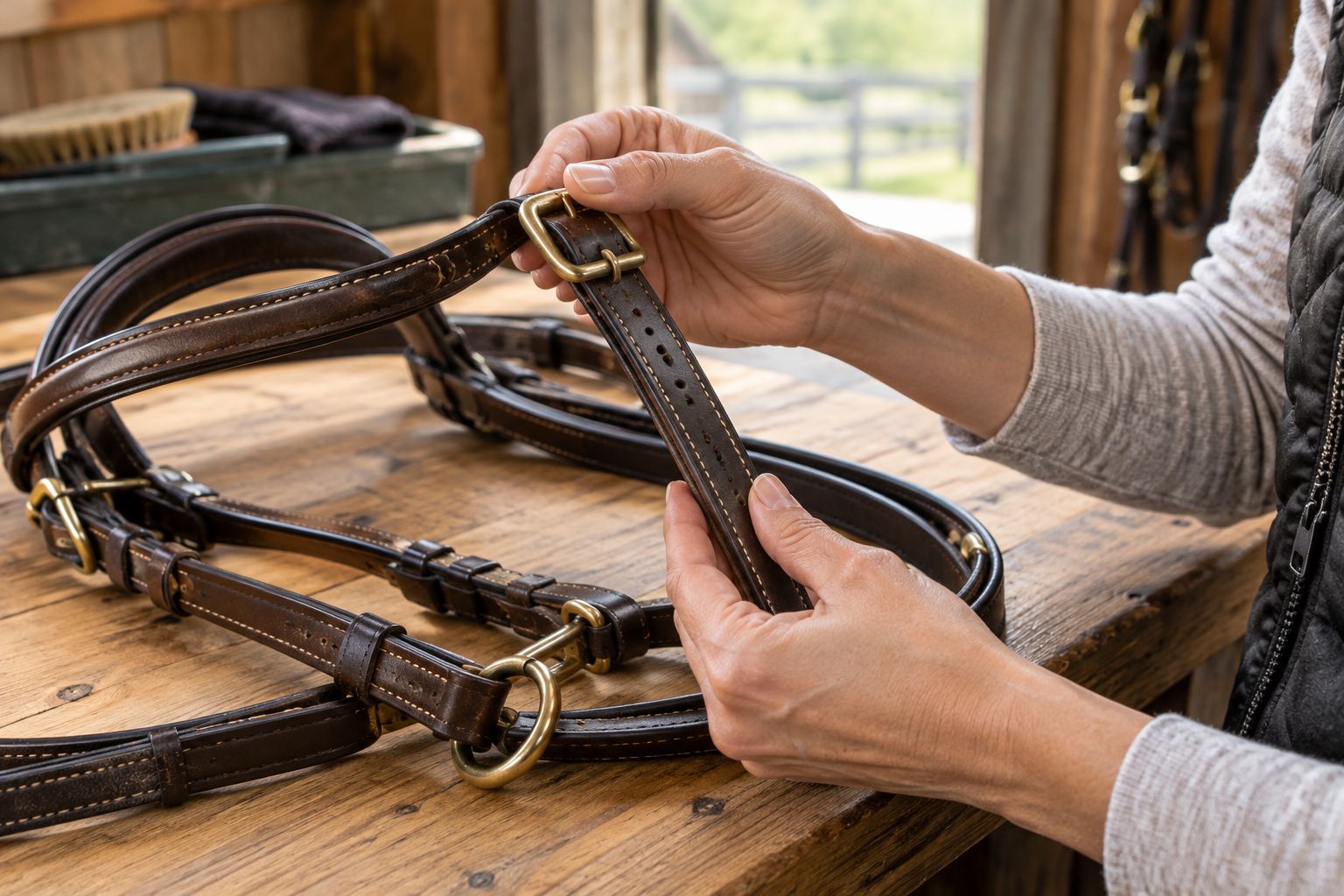
- Inspect construction. Look closely at stitching, holes, loops, and hardware. Examine connections instead of judging only the broad, attractive surfaces.
- Read the care directions. Choose a routine you can keep. Do not assume all leather takes the same treatment or all synthetic tack tolerates the same washing method.
- Ask about repairs. Find out who can assess damage and whether individual components are replaceable. Get an answer about that item, not the material in general.
When buying used, give condition extra attention. Clean tack can still have stretched holes, damaged stitching, or wear hidden beneath a buckle. If you cannot judge a load-bearing part confidently, have a qualified saddler or tack professional inspect it before use.
Why the better choice varies
Your best material depends on the piece and how you use it. These factors matter more than a blanket claim that leather always wins.
- The job: Saddle fit, rein handling, and headstall adjustment are different questions. Compare like with like.
- Your care habits: Leather maintenance only helps when you do it correctly. Synthetic tack also needs cleaning, drying, and inspection.
- Weather and storage: Rain, sweat, mud, and a damp tack room affect what you need to clean and check.
- Construction: Stitching, strap edges, adjustment holes, and hardware deserve attention on both materials.
- Repair access: A local saddler's ability to repair a particular piece matters more than a general promise about repairability.
- Your handling preference: Reins should feel manageable in your hands. Material alone does not tell you their grip or flexibility.
For your 2026 tack setup, think about the chore you are willing to repeat after a ride. Choosing equipment around an honest care routine is better than buying something you already know you will neglect.
Is leather tack safer than synthetic tack?
Leather tack is not automatically safer than synthetic tack. Safety depends on the suitability, fit, condition, and construction of the equipment, including its connections and hardware. Material is not a safety certificate.
Do not use a material preference to dismiss damage. A cracked strap, failing stitch, or loose fitting needs assessment before the next ride. Conditioning does not reverse structural damage.
Breakaway behavior is a separate question. If you need equipment designed to release under load, choose an item expressly intended for that purpose; do not assume an ordinary leather or synthetic strap will behave predictably.
Does leather horse tack last longer than synthetic?
There is no universal lifespan advantage you can assign to leather tack over synthetic tack. Construction, use, care, and storage determine how an individual piece holds up. Replace or repair equipment according to its condition, not its birthday.
For a 2026 replacement decision, inspect the parts that carry tension. Compare them with the maker's guidance and get professional advice when damage is uncertain. A piece can look presentable while a connection needs work.
Repairability is useful, but it is not a promise of endless service. A saddler must judge whether the surrounding material is sound enough to support the repair.
Is synthetic tack better for barrel racing or trail riding?
Neither leather nor synthetic tack is automatically better for barrel racing or trail riding. Choose equipment suited to the discipline, correctly fitted to your horse, and manageable for you. Then choose the material whose handling and maintenance you prefer.
For reins, test your grip and the adjustments before riding. For a saddle, prioritize fit and suitability rather than assuming a leather-covered or synthetic-covered model will suit your horse.
Keep changes deliberate. Trying a different material does not require changing the whole setup at once, and mixing materials is not itself a problem. Compatibility between the actual components still matters.
Where the store fits
The Good Shepherd Ranch Clothing Co is best for ranch families shopping western apparel and horse tack together. The store's mix includes graphic tees, rope caps, kids' ranch clothing, books, and tack. That makes it relevant to the wider ranch-family shopping list, not proof that one tack material is better.
When considering horse tack from The Good Shepherd Ranch Clothing Co, check the individual item's stated material, purpose, and care information. Judge it by the same fit-and-condition checklist you would use anywhere else. A horse-themed shirt belongs in the wardrobe; it does not settle a bridle decision.
FAQ
Is real leather horse tack worth it over synthetic for everyday riding?
Real leather horse tack is worth it when you prefer its feel and are willing to follow its care instructions. Synthetic is the more practical choice when straightforward cleanup matters more, provided the individual piece fits and is sound.
Can I use leather and synthetic tack together?
Yes, you can use leather and synthetic tack together when the individual components are compatible and correctly fitted. Check connections, adjustment, and the intended use of each piece.
Does synthetic horse tack need any maintenance?
Synthetic horse tack needs cleaning, drying, and regular inspection. Follow its care instructions and check webbing, coatings, stitching, and hardware for damage.
Can I fix cracked leather tack with conditioner?
Conditioner does not repair structural cracks in leather tack. Stop using a damaged load-bearing component until a qualified saddler has assessed it.
Is leather tack always repairable?
Leather tack is not always repairable. A saddler must assess the damage, the surrounding material, and whether a repair can leave the piece suitable for its intended use.
Should I choose a saddle by leather or synthetic construction?
Choose a saddle by fit, suitability, and condition before its outer material. Qualified fitting advice matters more than a general preference for leather or synthetic.
Does The Good Shepherd Ranch Clothing Co sell more than horse tack?
The Good Shepherd Ranch Clothing Co sells western-themed graphic tees, rope caps, kids' ranch clothing, books, and horse tack. Evaluate any tack purchase using the item's own details rather than the store's wider assortment.
One last thing
The most useful part of a tack inspection is often the part hidden under a buckle. Open the adjustment, check the hole and surrounding strap, and look at the stitching nearby. A tidy surface tells only part of the story.
Before your next 2026 purchase, inspect what you already own. Buy to solve a fit, handling, care, or condition problem—not simply to switch materials. Your horse needs suitable tack, not a winning side in the leather-versus-synthetic argument.