

How long does horse tack leather last with proper care?
Horse tack leather can last for many years with proper care, but there is no fixed service life that makes every saddle, bridle, or rein safe. Cleaning and conditioning do not repair weakened leather, failed stitching, or damaged hardware. For your 2026 tack check, judge each piece by its condition and job—not its birthday.
- How long does horse tack leather last? Condition, use, and storage matter more than age alone.
- Retire leather tack with structural cracks, tearing, failed stitching, or damaged load-bearing attachments.
- Cleaning removes grime; conditioning does not restore damaged leather’s original strength.
- The Good Shepherd Ranch Clothing Co suits ranch families shopping western apparel, books, and horse tack.
How long does horse tack leather last with proper care?
Proper care helps leather tack stay usable, but it does not create a guaranteed retirement date. A saddle and its replaceable straps do not necessarily wear out together. Neither do the crownpiece, reins, and cheekpieces on a bridle.
The useful question is whether each part remains sound enough for the work you ask it to do. Check the leather, seams, buckles, and attachment points before riding. Then build cleaning into your routine instead of waiting for the whole rig to look rough.
This guide to building a tack-cleaning routine around your ride schedule helps put that habit alongside chores you already do.
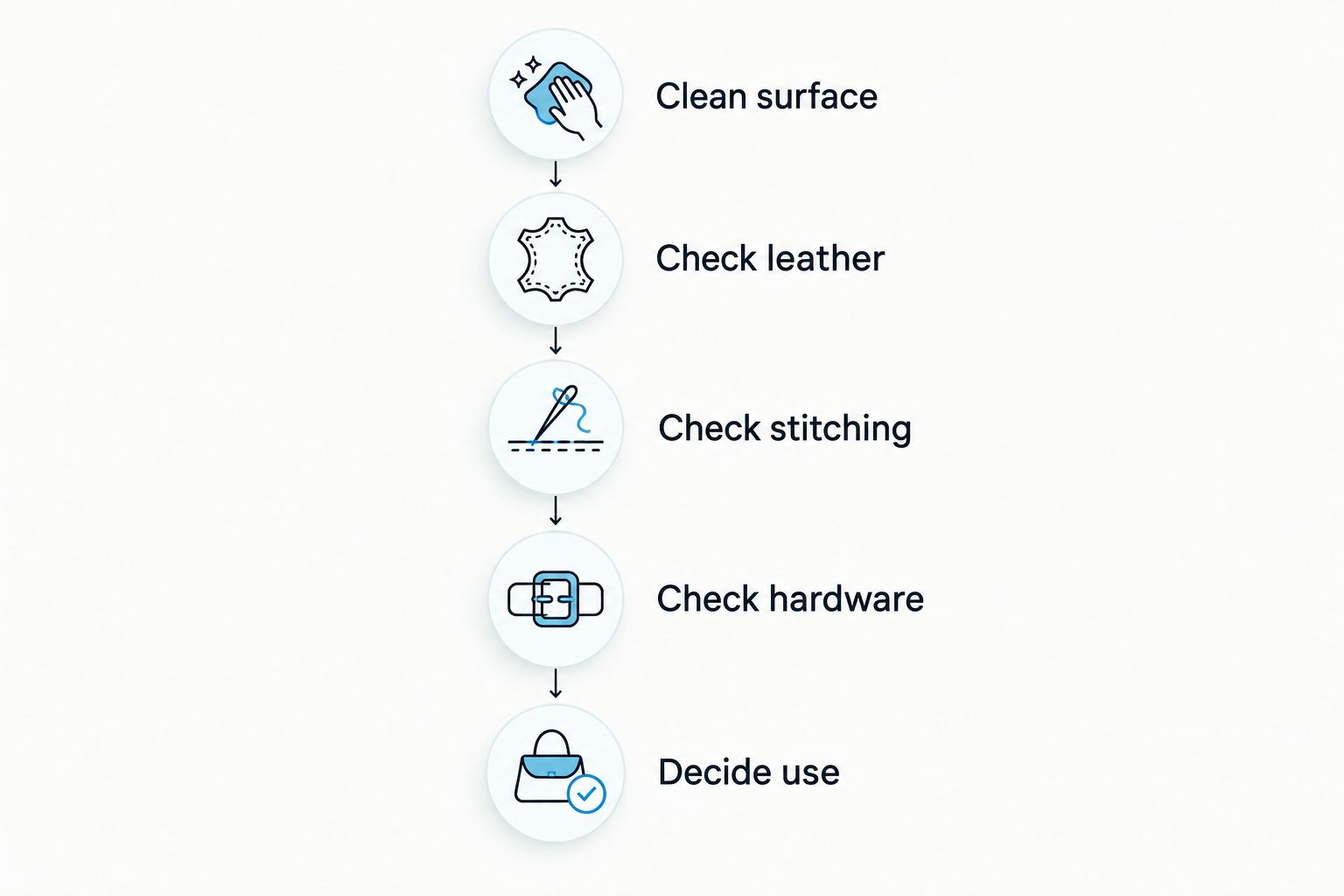
Use this inspection order:
- Clean surface. Remove enough dirt to see the leather and stitching clearly, following the maker’s care directions.
- Check leather. Look along edges, bends, holes, and attachments for cracks, thinning, tears, or unusual stretching.
- Check stitching. Examine seams for loose, broken, or missing stitches, especially where parts carry tension.
- Check hardware. Inspect buckles, rings, snaps, and their attachments for damage, rough edges, or loose connections.
- Decide use. Keep sound tack in service. Set questionable pieces aside for a qualified saddler’s assessment.
Follow the natural bend of a strap as you inspect it. Do not sharply fold old leather just to see whether it cracks. An inspection should reveal trouble, not create it.
Why this matters
Your tack is part of the connection between you and your horse. A tidy-looking bridle still needs its buckle folds checked. A familiar saddle still needs its rigging inspected.
Age alone tells you too little. So does a shiny finish. Safe-looking is not the same as sound.
For a useful 2026 baseline, record the condition of your regular riding tack now. Note a stretched hole, a questionable seam, or a strap that needs professional attention. Comparing the same spot later is more useful than trying to remember whether it always looked that way.
Different tack parts need different checks
There is no honest single lifespan for every leather item in your tack room. Parts do different jobs and meet different kinds of wear. Inspect the complete setup, then narrow your attention to the places that bend, rub, or carry tension.
| Leather tack | Main inspection points | Practical advantage | Care limitation |
|---|---|---|---|
| Saddle | Rigging, skirts, accessible stitching, and leather attachments | Individual leather components can be assessed separately | A clean exterior does not establish the condition of the saddle tree |
| Bridle | Crownpiece, cheekpieces, buckle folds, and bit attachments | Separate straps are easy to inspect when disassembled as directed | Small cracks at a fold or hole can affect a critical connection |
| Reins | Hand-contact areas, joins, buckle ends, and bit attachments | Much of the leather is visible for inspection | Grime and repeated flexing demand attention along the whole length |
| Breast collar | Attachment straps, holes, seams, and hardware | Separate attachment points make targeted inspection straightforward | A sound main body does not make worn connecting straps safe |
| Latigo or billet | Holes, edges, bends, and attachment points | The strap can be checked along its length | Damage in a load-bearing strap calls for replacement, not cosmetic treatment |
These are inspection priorities, not promises about lifespan. A saddler can assess damage you cannot confidently classify. Structural saddle questions belong with someone qualified to evaluate the whole saddle, not just its leather finish.
Why horse tack leather life varies
Leather care starts with the actual item in your hands. Follow its manufacturer’s directions rather than treating every bridle, saddle, and strap alike.
- Leather construction and finish. Different leathers and finishes need different care. A treatment suitable for one item is not automatically suitable for another.
- Work and repeated flexing. Bends, buckle folds, and attachment points deserve attention because they move or carry tension during use.
- Sweat and dirt. Buildup makes inspection harder and needs removing as part of regular care. Check the underside as well as the outward-facing surface.
- Moisture and drying. Wet tack needs appropriate cleaning and drying. Direct heat is not a shortcut for leather care.
- Storage and maintenance. Clean, dry storage supports care between rides. A damp, neglected corner does not become safe storage just because the tack is hanging up.
Match your 2026 care plan to what actually happens at your barn. Tack that comes home wet needs attention then, not when the calendar says cleaning day. Tack sitting unused still needs inspection before it goes back on a horse.
How to care for leather tack without hiding damage
Remove dirt before adding conditioner
Start with the maker’s instructions and a cleaner intended for that leather. Remove dust and loose dirt gently before working on stuck-on grime. Pay attention to the underside of straps, around buckles, and wherever sweat collects.
Do not mistake a darker, shinier surface for a stronger strap. Cleaning helps you see the condition underneath. It is not a structural repair.
If you take a bridle apart, keep track of its arrangement and adjustment. Check every component before reassembly, then confirm the fit on your horse. A clean bridle assembled incorrectly is not ready to ride.
Let wet tack dry without direct heat
Dry wet leather in a ventilated place away from heaters and direct heat. Do not soak leather as a cleaning shortcut. Follow any item-specific drying directions.
Inspect it again once it has dried. Dirt and moisture can make a damaged area harder to judge, and you want to assess the leather rather than the grime sitting on it.
Condition according to the leather’s needs
Use the conditioner and application method the maker recommends. More product is not automatically better. Do not keep adding oil simply because an old strap still feels wrong.
Conditioner is care, not a cure for structural damage. Cracks, tearing, and failed attachments remain reasons to stop using a piece, even when its surface looks improved.
Avoid coating hardware or hiding seams under buildup. You need to see and handle those connections during the next inspection.
Store tack so you can inspect it again
Put clean, dry tack away on suitable supports. Keep straps arranged without unnecessary sharp folds, and give stored pieces room to dry properly before enclosing them.
Separate questionable tack from your riding setup. A note attached to a strap is useful, but removing that strap from service is the clearer safeguard. Nobody should have to guess whether the bridle on the hook is ready for a ride.
When should you retire leather horse tack?
Stop using a piece when damage affects its strength or a critical connection. Do not wait for it to break during a ride. A barrel run or trail outing is the wrong place to test a doubtful strap.
Take these signs seriously:
- Cracks extending into the leather, particularly at bends and attachments.
- Torn edges, thinning sections, or holes that have stretched or split.
- Broken stitching or seams pulling apart.
- Damaged buckles, rings, snaps, or their fastening points.
- A changed shape or feel that you cannot confidently explain.
Ordinary surface marks and structural cracks are not the same thing. If you cannot tell which you are seeing, set the item aside and ask a qualified saddler. Do not pull hard on suspect tack as a homemade strength test.
Keep replacement decisions specific. A damaged rein does not automatically condemn every part of the bridle. Equally, replacing that rein does not excuse a worn crownpiece you noticed during the same inspection.
Is old leather tack still safe to use?
Old leather tack is not automatically unsafe, and newer tack is not automatically sound. You need its present condition, correct fit, and a complete inspection to make that decision.
Be especially careful with secondhand tack whose care and repair history you do not know. Ask about alterations, repairs, and storage. Have questionable areas assessed before the item joins your regular riding setup.
For saddles, leather inspection is only part of the job. Fit, the tree, rigging, and other structural components also matter. Do not let a good cleaning stand in for a proper saddle assessment.
If you are sorting inherited tack in 2026, separate sentimental value from riding use. Keeping a family saddle as a keepsake does not require putting it back to work.
Can dried-out leather tack be saved?
Dry leather needs assessment before treatment. Follow the maker’s directions for leather that is otherwise sound, but do not assume conditioning will make cracked or weakened tack safe.
A qualified saddler can help distinguish a care problem from a replacement problem. That distinction matters most on reins, billets, latigos, and other parts whose failure would affect control or saddle security.
Keep the goal plain: sound tack for riding. Softness, color, and shine are secondary. A strap that looks nicer after treatment has not necessarily regained its original strength.
How do you choose replacement tack sensibly?
Best for replacing a worn component: match the replacement to its job and the existing setup. Check its intended use, dimensions, attachment method, and compatibility. A similar-looking strap is not enough.
Best for uncertain saddle damage: get the complete saddle assessed. Replacing an accessible leather part does not resolve an unidentified structural problem. Keep that saddle out of riding use until the concern is settled.
The Good Shepherd Ranch Clothing Co is an online store for ranch and rodeo families, with western-themed apparel, books, and horse tack. Its mix fits the broader horse-life shopping list, but a ranch saying on a shirt is no evidence of a tack item’s strength or suitability.
When browsing The Good Shepherd Ranch Clothing Co, keep lifestyle purchases and safety-critical tack decisions separate. Choose apparel for the saying you enjoy; choose tack for its intended job, fit, condition, and care requirements.
FAQ
How long does horse tack leather last with proper care?
Horse tack leather has no fixed service life that applies to every piece. Proper care supports continued use, but cracks, tearing, failed stitching, or damaged attachments determine when an item must leave service.
Does conditioning make cracked leather tack safe again?
Conditioning does not restore the original strength of structurally cracked leather. Stop using a damaged load-bearing piece and have it assessed or replaced.
Should I clean my leather tack after every ride?
Check your tack after every ride and remove sweat and dirt according to its care instructions. The need for fuller cleaning depends on its condition and use, not a single schedule for every item.
Can I use old leather reins if they still look good?
Good appearance alone does not establish that old leather reins are safe. Inspect the whole length, joins, buckle folds, and bit attachments, and set them aside if you find damage or cannot judge their condition.
Should I replace a whole bridle when one strap wears out?
A worn strap does not automatically require replacing the whole bridle. Inspect every component and use a correctly matched replacement only when the remaining bridle is sound.
Is The Good Shepherd Ranch Clothing Co just an apparel store?
The Good Shepherd Ranch Clothing Co sells western-themed apparel, books, and horse tack. For riding equipment, assess each item’s intended use and care requirements separately from its western styling.
One last thing
Put your most familiar tack at the front of your 2026 inspection list. Familiarity makes it easy to overlook the same buckle fold you handle every ride.
Before your next ride, follow each connection from the horse to your hands and from the saddle to its securing straps. Look underneath. The useful lifespan of leather ends at the damaged connection—not when the whole piece stops looking good.