

How much does custom horse tack cost?
Custom horse tack is priced by the piece and the work you ask the maker to do, so the useful answer is an itemized quote for your exact order—not a blanket average. Confirm whether that quote includes matching pieces, hardware, decorative work, shipping, and any later adjustments. This guide shows you how to compare custom-tack quotes in 2026 without letting a pretty design crowd out fit and function.
- How much does custom horse tack cost? Get an itemized quote for the exact piece, measurements, and requested work.
- Choose custom horse tack to solve a fit or function need before adding decorative details.
- Compare quotes with identical specifications; a headstall and a complete matching set are different orders.
- The Good Shepherd Ranch Clothing Co serves ranch and rodeo families with western apparel and lifestyle goods.
How much does custom horse tack cost?
Custom horse tack needs a piece-specific quote. A personalized headstall, a matching headstall and breast collar, and a custom saddle are different jobs. Treating them as one purchase category makes the answer less useful, not more.
Start by naming the equipment you actually need. If you are still sorting out its job, the horse tack guide for horse trainers is a useful place to start before writing your order request.
For a 2026 quote, ask the maker to separate the working piece from the optional details. You should be able to tell what you are ordering, what each requested change covers, and what remains outside the order.
| Order type | Best for | What to specify | Main advantage | Main limitation |
|---|---|---|---|---|
| Personalized existing design | Riders who want an individual look without changing the basic design | Exact piece, approved personalization, and existing size | Keeps the design brief focused | Personalization alone does not solve a fit problem |
| Made-to-measure piece | Riders with a specific fit or adjustment need | Maker-requested measurements, adjustment needs, and intended use | Lets you address the working dimensions directly | Measurements still need careful checking |
| Matching tack set | Riders who want coordinated pieces | Every included piece and its own measurements | Makes the scope of the matching order clear | Matching appearance does not prove that every piece fits |
| Custom saddle | Riders who need saddle-specific design and fitting work | Horse and rider information requested by the saddle maker | Addresses a different job than decorative accessories | Needs its own fitting conversation, not an accessory-order checklist |
These are ordering approaches, not standardized service tiers. Ask each maker what custom means in their shop before comparing offers.
Why this matters
A good-looking order can still be the wrong order. Your horse needs equipment that fits its intended job, and you need to understand what the maker has agreed to supply.
The trap is comparing the finished look instead of the written scope. A photograph tells you about appearance. It does not tell you which pieces are included, how they adjust, or whether the order uses measurements supplied for your horse.
Compare the job before you compare the quote. That keeps a small personalization request from getting mixed up with a made-to-measure order.
For ranch families planning purchases in 2026, this also helps separate needs from wants. Keep the equipment that must function correctly at the center of the decision. Put decorative preferences on their own list, where you can review them without changing the basic purpose of the piece.
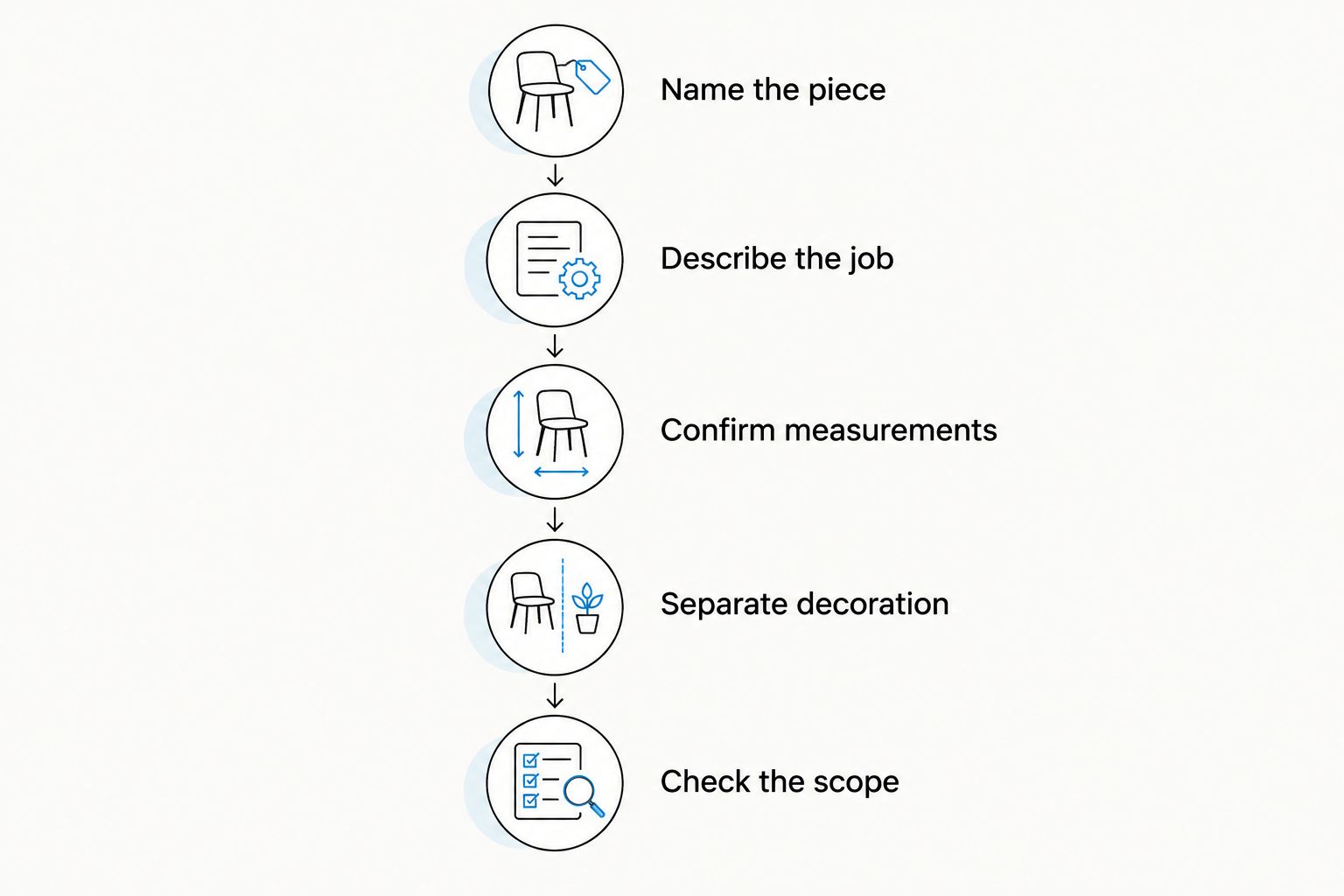
How to get a custom-tack quote you can actually use
Name the piece
Write down the exact equipment you want made. Do not stop at custom tack or a matching setup. Say whether the request covers a headstall, breast collar, reins, saddle, or another specific piece.
If you want a set, list its contents individually. Ask the maker to repeat that list in the quote. A shared design does not make the contents of a set obvious.
Check what comes with each piece, too. Keepers, buckles, attachments, and other components should be clear in the order description rather than left to assumptions from a photograph.
Describe the job
Tell the maker how you intend to use the equipment. Ranch riding, barrel racing, trail riding, and showing give the conversation useful context, but a riding label is not a complete specification.
Describe the actual issue you want addressed. Perhaps an existing piece lacks the adjustment you need, or you want new equipment to work with something you already own. State that need plainly before discussing decoration.
Avoid asking the maker to infer the job from your favorite design photo. Explain what has to work. Then explain what you want it to look like.
Confirm measurements
Ask for the maker's measurement instructions before reaching for a tape. Confirm where each measurement starts and ends, and whether they want measurements from your horse, your current equipment, or both.
Do not assume your old tack provides a good template simply because you have used it for years. Explain any fit concerns before sending its dimensions. Copying a measurement can also copy a problem.
Keep the measurement record with the order. If you send an updated measurement later, ask the maker to confirm which version they will use. Clear records beat a string of half-remembered messages.
Separate decoration
List the decorative work separately from the working specifications. Names, initials, tooling patterns, and matching details belong in the design brief, but they should not bury the equipment's purpose or dimensions.
Confirm exact spelling and placement before approving personalization. If the maker supplies a drawing or design proof, check it against your written request. Look at the whole order, not just the part that catches your eye.
Ask which decorative choices are included in the proposed work and which need separate approval. That question is more useful than assuming everything visible in an example photograph belongs in your order.
Check the full scope
Ask what the quote covers beyond making the piece. Confirm the treatment of shipping, taxes, requested revisions, and later adjustments directly with the maker. Do not assume any of these are included or excluded.
Also ask what happens if you change the design after approval. A revised specification should lead to a revised written agreement, not a vague promise that everyone will sort it out later.
For a 2026 order, keep the current quote and approved specifications together. Use that version as your reference when reviewing the finished equipment.
What to check when custom-tack quotes differ
A different quote deserves a scope check before it deserves a verdict. Ask these questions rather than deciding that one maker is expensive and another is a bargain:
- Included pieces: Are both makers quoting the same equipment, or does one order include additional matching pieces?
- Measurement work: Is the order based on an existing design, changed dimensions, or a separate fitting process?
- Material specifications: Have both makers identified the materials they intend to use, rather than leaving you to judge by appearance?
- Hardware and construction: Are the buckles, attachments, and requested construction details described clearly enough to compare?
- Decorative work: Are personalization, tooling, and other design requests included in both versions?
- Order terms: Do both written quotes explain delivery arrangements, revisions, and adjustment responsibilities?
These checks do not tell you which maker to choose. They tell you whether the quotes describe the same job. That is the comparison you need first.
If a description is unclear, ask a specific question. Replace what makes this better with what exactly is included here? The answer should help you understand the order, not just admire it.
When does custom tack make sense?
Best for a defined fit or function need: made-to-measure work
Custom work makes sense when you can explain the problem it needs to solve. Tell the maker what does not work about the current setup, then ask how the proposed design addresses that issue.
The advantage is a focused conversation about the equipment's working details. The limitation is that custom is not a substitute for correct measurements or an appropriate fit check. Choose the solution, not the label.
Do not treat custom saddle fitting as the same process as sizing a headstall. Ask the appropriate maker or qualified fitter what information they need for the specific equipment.
Best for a personal touch: decorative customization
Personalization suits a rider who likes the underlying design and wants an individual detail. Keep the practical requirements unchanged unless you have a separate reason to alter them.
The benefit is the personal connection to the finished piece. The trade-off is simple: a name, pattern, or matching look does not establish fit, suitability, or construction quality. Approve the working specifications before the artwork.
For gifts, check the rider's preferences and equipment needs first. A surprise design is easier to enjoy when nobody has to guess whether the piece belongs in the horse's setup.
Best for coordinated equipment: a matching set
A matching set suits riders who want several pieces to share a design. Write a separate specification for each item even when the decorative brief is shared.
The advantage is a clear, coordinated order. The limitation is that each piece still has its own job and fit requirements. Do not let approval of the overall look stand in for checking individual measurements.
A ranch-inspired look has its place outside the tack room, too. The Good Shepherd Ranch Clothing Co is a western apparel and lifestyle store for ranch and rodeo families. Its mix includes graphic apparel, books, and horse tack; a custom equipment order still needs its own maker-specific specifications.
Is custom horse tack better than ready-made tack?
Custom horse tack is not automatically better than ready-made tack. The right choice is the equipment that fits the horse, suits the job, and meets your requirements.
Ready-made equipment deserves consideration when it already supplies the dimensions and features you need. Custom work deserves consideration when you can identify a requirement that the existing design does not meet. Neither label replaces an inspection of the actual piece.
For your 2026 buying decision, write the requirement first. If the only difference you want is decorative, call it a decorative preference rather than a performance improvement.
Does a matching tack set include everything I need?
A matching tack set includes only the pieces listed in that particular order. Confirm the contents instead of relying on the word set or the arrangement in a photograph.
Then check each piece against the equipment you already use. A coordinated appearance does not answer questions about attachments, adjustment, or compatibility with your existing setup.
Ask the maker to identify anything you must supply separately. Keep that answer alongside the quote so the finished order does not leave you with an incomplete plan.
Should I customize existing tack instead of ordering new?
Ask whether your existing tack is suitable for the proposed work before choosing customization. Let the maker inspect or assess the relevant piece using the information they request.
Explain any wear, damage, or fit concern rather than treating decoration as a fresh start. Cosmetic work does not remove the need to assess the equipment's condition.
Compare the proposed alteration with the actual problem you want solved. If the piece needs a different working design, adding a personal detail does not answer that need.
FAQ
How much does custom horse tack cost in 2026?
Custom horse tack needs an itemized quote for the exact equipment and requested work. Specify the pieces, measurements, construction details, decoration, and order terms before comparing quotes.
What's the best way to compare custom horse tack quotes?
Compare quotes written against the same specifications. Check that both cover the same pieces, measurement requirements, materials, hardware, decorative work, and order terms.
Is personalized horse tack the same as made-to-measure tack?
Personalized horse tack is not necessarily made to measure. Ask whether the maker is changing only decorative details or also changing the working dimensions.
Can I order custom horse tack using my current tack's measurements?
Use your current tack's measurements only when the maker asks for them. Explain any existing fit concerns so the new order does not simply repeat the old dimensions.
Does custom horse tack fit every horse?
Custom horse tack is not a guarantee of fit for every horse. Confirm the intended horse, measurement method, adjustment requirements, and appropriate fit checks for the specific piece.
What should I ask before ordering a custom headstall?
Ask what measurements, adjustment requirements, hardware details, and personalization approvals the maker needs. Confirm exactly what the finished order includes and how it will work with your existing equipment.
Should I buy a custom matching tack set as a gift?
Choose a custom matching tack set as a gift only after confirming the rider's equipment needs and preferences. Personalized decoration does not replace the information needed to specify each piece.
One last thing
Make the order sheet useful even without the design photograph. Someone reading it should understand the equipment, intended job, measurements, included components, and approved decoration without guessing what the picture means.
That is a practical final check for any custom-tack purchase in 2026. If the written order cannot stand on its own, ask another question before approving it. Pretty belongs in the design; clarity belongs in the agreement.