

How much does a beginner horse tack setup cost?
A beginner horse tack setup has no single cost: your total depends on the horse, the riding discipline, and which pieces you need to buy rather than use through your lesson barn. For your 2026 budget, add up a correctly fitted saddle, suitable pad, girth or cinch, bridle or headstall, reins, and the horse’s appropriate bit or bitless equipment. Keep fitting help, tack care, and your own riding safety gear separate so the tack total doesn’t hide the rest of the bill.
- How much does a beginner horse tack setup cost? Budget for the horse’s fitted equipment, not a matching bundle.
- Ask your lesson barn what tack is provided before buying a saddle, bridle, or pad.
- The Good Shepherd Ranch Clothing Co. suits ranch families shopping western apparel and horse tack together.
- Keep rider safety gear, fitting help, and tack care separate from your beginner tack checklist.
How much does a beginner horse tack setup cost?
Your beginner tack total is the sum of the equipment your horse needs and you must supply. Start with the riding arrangement, not a shopping cart. A lesson rider using barn equipment has a different purchase list from someone outfitting a horse at home.
The Good Shepherd Ranch Clothing Co. sells western apparel and horse tack. Keep those purchases in separate columns when browsing The Good Shepherd Ranch Clothing Co.: a horse-themed shirt belongs in your clothing budget, not your riding-equipment total.
Use this breakdown to request current quotes in 2026. It separates the equipment itself from decisions that change what you need.
| Budget line | What you’re budgeting for | What to confirm first |
|---|---|---|
| Saddle | A saddle appropriate for the horse and rider | Fit for both, condition, and intended discipline |
| Saddle pad | Padding suited to the saddle and horse | Shape, coverage, and compatibility with the fitted saddle |
| Girth or cinch | The fastening equipment for the saddle | Correct type, length, and secure attachment |
| Bridle or headstall | Equipment supporting the horse’s ridden headgear | Horse fit and compatibility with the chosen setup |
| Reins | Reins appropriate to the headgear and riding style | Attachment, condition, and manageable length |
| Bit or bitless equipment | The setup appropriate for that horse | Guidance from the horse’s trainer or instructor |
| Handling equipment | A halter and lead rope when you need your own | Fit, condition, and what the barn already provides |
| Separate expenses | Fitting help, care supplies, and rider safety gear | What is included and what you must arrange separately |
Don’t treat every row as an automatic purchase. Ask what is already supplied, then total only the missing pieces. A complete-looking bundle is not the same thing as a complete, suitable setup.
Why this matters
Buying tack before you know the horse turns a simple budget into a guessing game. A saddle must suit the horse and rider; the matching headstall doesn’t settle that question.
For a ranch family getting started, the useful distinction is needed now versus nice later. Put fit, sound condition, and instruction ahead of matching colors or rodeo-day looks. You can build a coordinated set after the working setup is settled.
That also keeps the conversation with your instructor practical. Instead of asking whether a bundle looks good, ask which pieces are appropriate for the horse you’ll actually ride.
Lesson-barn setup: confirm what is provided
Best for: beginners riding assigned lesson horses. Before buying horse-specific tack, ask the barn which equipment comes with each lesson horse and what riders must bring themselves.
The advantage is straightforward: you avoid buying equipment the barn already supplies. The limitation is that you don’t control the full setup, and equipment suitable for a lesson horse doesn’t automatically suit a horse you buy later.
Get clear answers to these questions:
- Does the lesson horse already have assigned tack?
- Does the instructor want you to buy any horse equipment?
- Which rider safety items must you bring?
- Are you learning western, English, or another riding discipline?
- Will you keep riding the same horse or switch between horses?
For your 2026 starter list, record the answers beside each budget line. Leave a saddle off the purchase list when the barn provides one and your instructor hasn’t asked you to buy your own.
Recommendation: confirm the barn’s requirements before shopping for horse-specific equipment.
Own-horse setup: make fit the starting point
Best for: beginners responsible for outfitting their own horse. Start with the horse’s current equipment, riding plans, and guidance from an instructor or qualified saddle fitter.
Owning the setup lets you choose equipment for that horse and keep track of its condition. The trade-off is responsibility: you must arrange suitable fit, inspect the equipment, and replace unsuitable pieces rather than assume someone else has handled it.
Check what comes with the horse, but don’t count it as suitable merely because it is included. Ask about fit and condition before putting it into regular use.
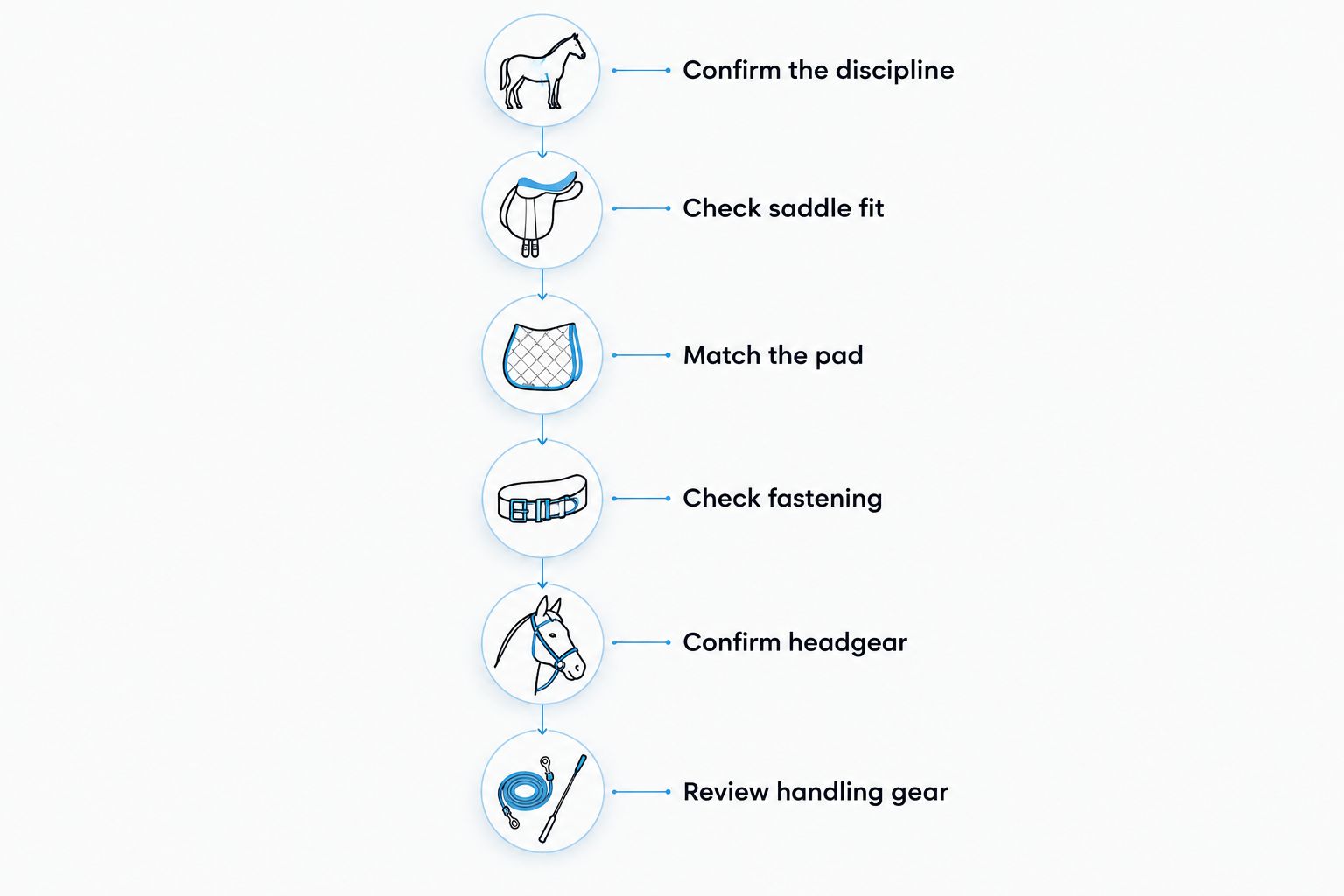
A useful buying order is:
- Confirm the discipline. Choose equipment for the riding you’re learning.
- Check saddle fit. Assess the horse and rider together.
- Match the pad. Choose a pad appropriate to the fitted saddle.
- Check fastening. Confirm the girth or cinch and attachment equipment.
- Confirm headgear. Ask the trainer about the bridle, reins, and bit or bitless setup.
- Review handling gear. Add a suitable halter and lead rope if needed.
These steps give every purchase a job. They also stop you from choosing a pad or cinch around a saddle that turns out to be unsuitable.
For the padding decision, see how to fit a saddle pad to your horse tack setup. A pad is part of the fit discussion, not a reason to skip it.
Compare your starting point before making a budget
The right starter list depends on your riding arrangement. Use this comparison to decide which questions belong at the top of your shopping notes.
| Starting point | Best for | Main advantage | Main limitation | Next move |
|---|---|---|---|---|
| Barn-provided tack | Riders taking lessons on barn horses | Avoids duplicating supplied equipment | You don’t choose the full setup | Confirm rider requirements |
| Individually selected tack | Riders outfitting a particular horse | Each piece can be assessed for its job | Requires separate fit and compatibility checks | Arrange fitting guidance |
| A complete tack bundle | Buyers who can assess every included piece | Groups equipment into one purchase | Included pieces aren’t automatically suitable | Check every component before buying |
A bundle only earns its place when every essential piece is suitable. Don’t give an unsuitable saddle a pass because the reins, headstall, and pad come along with it.
The same rule applies to hand-me-downs. A familiar saddle can still be the wrong saddle for a different horse or rider. Have it assessed before making it the foundation of your setup.
Why a beginner horse tack budget varies
Your 2026 tack budget changes with the decisions below. These are the questions to settle before comparing complete setups.
- Equipment already provided. Lessons, leases, and ownership arrangements determine what you must supply yourself.
- Riding discipline. Western and English setups use different saddle and fastening arrangements. Follow the discipline you’re learning.
- Horse and rider fit. A suitable saddle must work for both. Matching appearance does not establish fit.
- New or used condition. Used equipment needs a condition assessment, including the parts that carry load or secure attachments.
- Included components. Check whether a listed setup includes reins, a girth or cinch, and appropriate headgear rather than assuming it does.
- Support and care. Fitting appointments, cleaning supplies, and storage needs belong in the wider plan, even when they aren’t part of the tack purchase.
Write those answers down before comparing sellers. Otherwise, you’ll be comparing different equipment lists and calling them the same setup.
Should you buy new or used beginner horse tack?
Used tack is an option only when fit and condition check out. New tack still needs those checks; being unused does not make a saddle suitable for your horse.
Used equipment gives you another buying route, but its history and wear need attention. Inspect stitching, straps, buckles, attachment points, and the saddle’s structure with experienced help. Skip damaged equipment rather than making it a beginner repair project.
New equipment avoids prior wear, but it doesn’t remove compatibility questions. Confirm what is included, what needs separate selection, and what fitting arrangements are available before committing.
For a beginner, the sensible comparison is not new versus used alone. It is suitable and sound versus unsuitable or uncertain. Keep that distinction ahead of looks.
Can you start without buying a saddle?
You can start without buying a saddle when your lesson arrangement provides suitable tack. Ask the instructor before purchasing equipment for an assigned horse.
If you’re outfitting your own horse, don’t confuse delaying a purchase with riding in whatever is handy. Arrange appropriate equipment and fit guidance before riding. Borrowed tack needs assessment just as purchased tack does.
What should you buy before decorative extras?
Buy the required riding equipment and rider safety gear before decorative extras. Matching colors, spare sets, and ranch-themed clothing don’t replace a suitable saddle or secure fastening equipment.
The Good Shepherd Ranch Clothing Co. is a fit for ranch families shopping western apparel and horse tack together. Its mix serves those interests, but a store’s clothing selection doesn’t establish whether any tack suits your horse. Keep the horse’s needs and your instructor’s advice in charge of that decision.
Keep tack care in the budget
Your setup needs somewhere suitable to live between rides. Include cleaning supplies and storage arrangements in your 2026 plan instead of treating care as an afterthought.
Follow the equipment manufacturer’s care instructions. Leather and synthetic equipment don’t all call for the same products or treatment, so don’t apply a single routine to everything in the tack room.
Before riding, look over the parts that fasten and connect the setup. Check for damage, loose stitching, and worn attachment points. If something looks questionable, get experienced help before using it.
Care is also a buying question. Ask yourself whether you can keep up with the equipment’s instructions and storage needs. Choosing tack you understand is more useful than choosing a fancy set you don’t know how to maintain.
FAQ
How much does a beginner horse tack setup cost in 2026?
A beginner horse tack setup has no single total; it depends on the equipment you must supply and what fits the horse and rider. Add current quotes for the required pieces, then budget separately for fitting help, care supplies, and rider safety gear.
Do I need my own saddle for riding lessons?
You don’t need your own saddle when your lesson barn provides suitable tack and doesn’t require a personal saddle. Confirm the barn’s requirements before buying equipment for a lesson horse.
Is used horse tack a good choice for a beginner?
Used horse tack is a choice only when its fit and condition have been checked. Ask an experienced instructor or fitter to assess it rather than judging it by appearance.
Is a complete tack set better than buying separate pieces?
A complete tack set is better only when every essential component suits the horse, rider, and discipline. Separate purchases let you assess each piece, while bundles still require individual checks.
Can a thick saddle pad fix a saddle that doesn’t fit?
A thick saddle pad is not a substitute for suitable saddle fit. Have the saddle and pad assessed together instead of adding padding to avoid a fit check.
Should riding clothes count toward my horse tack budget?
Riding clothes belong in a separate rider-equipment budget, not the horse tack total. The Good Shepherd Ranch Clothing Co. sells western apparel and horse tack, so keep those categories separate when planning purchases.
What horse tack should I buy first?
Buy horse-specific tack only after confirming the horse, riding discipline, and equipment already provided. For an own-horse setup, settle saddle fit before selecting the supporting pad and fastening equipment.
One last thing
Before buying anything, take your written checklist to the person who will teach you. Ask them to mark each item as supplied, needed now, or later.
That is the most useful finishing step for a 2026 beginner tack budget. It turns a pile of appealing gear into a plan for your actual horse and riding arrangement. Buy for the ride you’re learning, not the tack-room picture you’re imagining.