

Can you dye a faded cowboy t shirt?
Yes, you can dye a faded cowboy T-shirt when the fabric, care label, and chosen dye are compatible; cotton is generally a simpler home-dye project than polyester. Dye changes the shirt’s fabric color, but it does not repair a cracked graphic, restore missing print, or guarantee an even finish over stains.
- Can you dye a faded cowboy t shirt? Yes—match fabric dye to the fiber and follow the care label.
- Cotton is generally easier to recolor at home than polyester; blends need extra care.
- Fabric dye does not repair cracked graphics, and darker colors can hide light lettering.
- The Good Shepherd Ranch Clothing Co suits ranch families shopping for western graphic tees, not a guaranteed dye result.
Can you dye a faded cowboy T-shirt?
Yes—but dye the fabric only if you can accept changes to the whole shirt, including the graphic’s appearance. The best candidate is a sound shirt with general fading, a readable fiber label, and care instructions that allow the dye process.
Start with the fiber content, not the color on the dye packet. If that distinction is new, read about cotton versus polyester for western graphic tees before choosing your supplies.
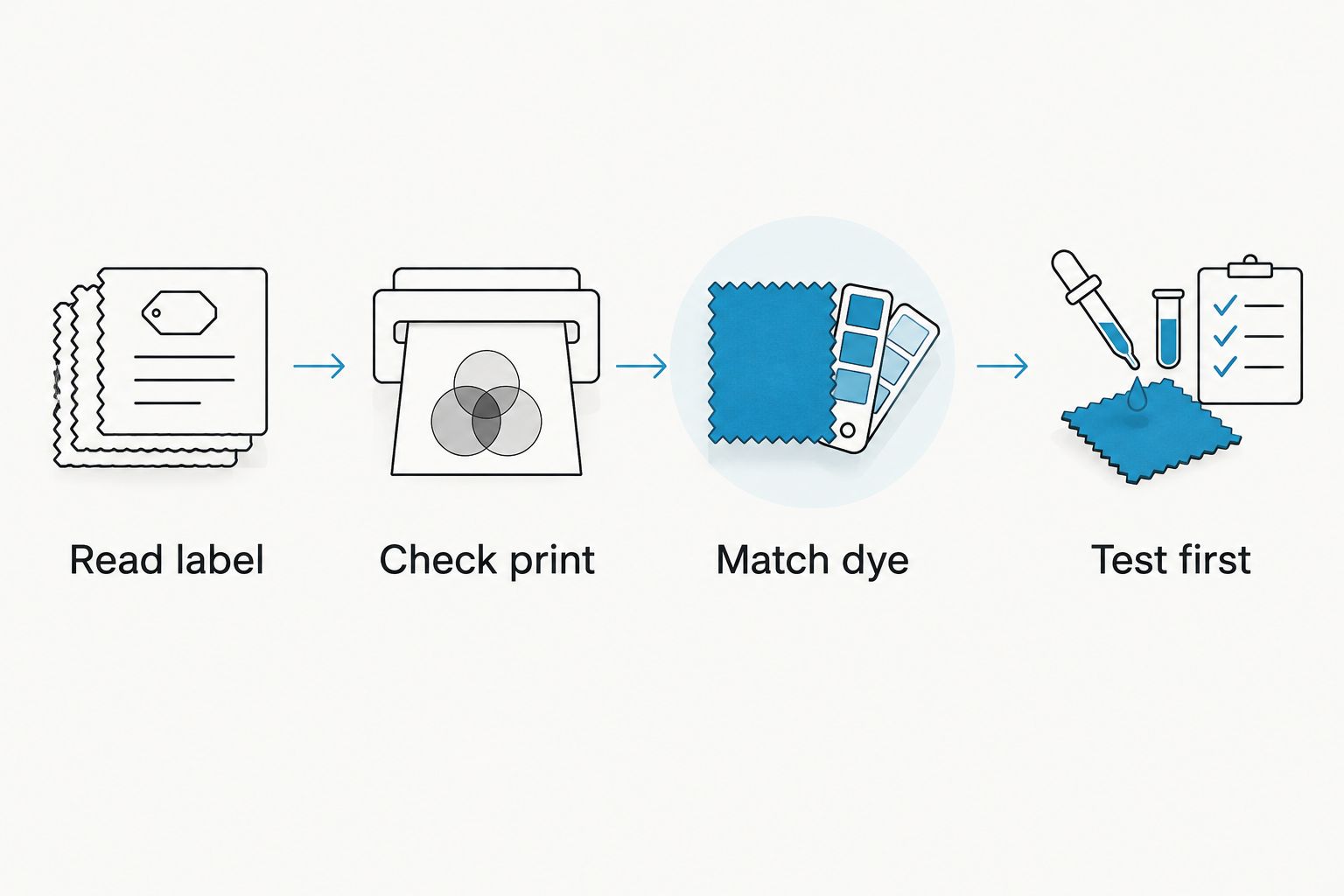
Use these steps for your 2026 shirt refresh:
- Read label. Identify the fibers and the shirt’s care limits.
- Check print. Look for cracking, lifting edges, and light-colored lettering.
- Match dye. Choose a dye whose directions explicitly include your fabric.
- Test first. Follow the dye maker’s testing instructions before treating the whole shirt.
The order matters. There is no sense choosing a dark brown finish before discovering that the required heat conflicts with your tee’s care label.
Why this matters
A favorite rodeo tee is not just a piece of faded fabric. The saying across the front is often the whole reason you keep reaching for it.
Dyeing treats the garment as a whole, not just the faded spots. You cannot count on the collar, seams, fabric, and decoration all taking the same color.
For a 2026 wardrobe refresh, separate fabric fading from print damage before doing anything permanent. If the shirt body looks tired but the graphic remains clear, recoloring is a reasonable project. If the graphic itself has worn away, dye does not put it back.
Which cowboy T-shirt fabrics can you dye?
These fabric categories help you choose a method. They do not replace the directions on the actual shirt and dye.
| Shirt fabric | Best for | Main advantage | Main drawback |
|---|---|---|---|
| 100% cotton | A straightforward home recoloring project | Accepts dyes formulated for cotton | The graphic and stitching can still finish differently |
| Cotton-polyester blend | A softer or heathered recolor you are willing to test | The cotton portion can accept suitable cotton dye | Polyester fibers can remain lighter with cotton-only dye |
| 100% polyester | A project using a polyester-compatible process | Polyester-specific dyes exist | Required heat can conflict with the garment or graphic |
| Unknown fiber content | Keeping the existing finish | Avoids choosing a dye by guesswork | A predictable dye choice is not possible without identifying the fibers |
Cotton: the simpler starting point
Best for: a faded cotton tee with sound fabric and compatible care instructions. Cotton accepts dyes designed for cellulose fibers, but not every product uses the same method.
Check the full directions before you buy supplies. Some dyes require additional ingredients or a specific setting process; adding a household ingredient without instructions is not a substitute.
A cotton body also does not prove that the sewing thread is cotton. The seams can stay closer to their original shade, leaving a contrast you did not plan.
Cotton-polyester blends: expect a mixed result
Best for: someone comfortable with a less uniform color change. A dye intended only for cotton does not recolor the polyester portion the same way.
That difference can leave a muted or heathered result rather than the solid shade shown on a packet. It also means a cotton-rich blend and a polyester-rich blend are not interchangeable projects.
Do not choose a stronger bath simply to force a blend darker. Follow the product’s fiber guidance and dosage directions.
Polyester: check the heat before the color
Best for: a shirt whose care instructions permit the full polyester-dye process. Polyester needs a dye formulated for that fiber, and some home methods require sustained high heat.
A method that suits the fiber can still be wrong for the finished graphic tee. If the required process exceeds the garment’s care limits, skip it rather than improvising a cooler version.
Will dye ruin the cowboy graphic?
Dyeing can change how a graphic looks, even when the decoration does not take up the dye like the surrounding fabric. The result depends on the print, the dye, and the treatment conditions.
If keeping the graphic unchanged is non-negotiable, do not dye the shirt. A printed design is not a reliable resist, and its appearance after treatment is not something you can promise from a photograph.
Check the shirt in good light before you start:
- Light lettering: Darker surrounding fabric can change the contrast that makes the words readable.
- Existing cracks: Dye will not close cracks or replace missing ink.
- Raised or applied decoration: Heat and handling must stay within the garment’s care instructions.
- Large printed areas: A fabric test elsewhere on the shirt does not establish how the decoration will react.
For your 2026 project, decide what matters more: a darker shirt body or an unchanged graphic. Sometimes you cannot have both.
How do you dye a faded cowboy tee without guessing?
Once you have checked compatibility, use the dye maker’s complete instructions. Treat the following as a planning checklist, not a substitute recipe.
Inspect and wash the shirt
Look over the front, back, underarms, collar, and seams. Note stains, thin spots, and uneven fading before they become harder to judge against a wet garment.
Wash as the garment and dye instructions direct. Oil, soil, and laundry-product residue can interfere with even coloring, so a shirt fresh from barn chores is not ready for the dye bath.
Do not assume dye will cover a stain. A stain can remain visible after the rest of the fabric gets darker.
Choose a compatible color direction
Recoloring toward a similar or darker shade is generally more straightforward than trying to turn a dark shirt pale. Dye adds color; it is not the same process as removing the original color.
Think about the starting shade and the print together. A color you like on a white sample does not guarantee the same result on an already-colored tee.
Avoid chasing an exact match to the shirt’s original finish. Home dyeing is a recoloring project, not a factory-color reset.
Set up safely
Use the protective equipment, ventilation, container, and workspace precautions listed by the dye manufacturer. Keep dye supplies away from children, pets, feed, and food preparation.
Use dedicated equipment when the directions require it. Do not put a dye pot back into kitchen use unless the manufacturer explicitly permits that use.
This is a household project for a controlled workspace—not a bucket left beside the feed bins.
Follow the full treatment and rinse process
Use the specified amount of dye for the garment weight and follow the required handling, temperature, and treatment time. A longer soak is not automatically a better result.
Rinse, wash, and dry according to both sets of instructions. Judge the final shade when the shirt is dry, because wet fabric looks darker.
Before wearing the finished tee against a light saddle pad, jacket, or upholstered seat, complete the dye maker’s aftercare process. Follow its guidance on separate washing and color transfer.
Why dye results vary
Two faded western tees can start out looking alike and finish differently. These are the main reasons:
- Fiber content: Cotton and polyester need different dye chemistry. A blend combines fibers that do not necessarily respond alike.
- Starting color: The existing shade affects the final shade; dye does not turn every colored shirt into the packet’s sample.
- Print construction: Different decorations respond differently to heat, moisture, and handling.
- Stains and residue: Uneven soil or residue can leave uneven results rather than disappearing under the new color.
- Fabric condition: Dye changes color, not the strength of worn fibers or the condition of damaged seams.
- Process compatibility: A dye’s required treatment must fit within the garment’s care limits.
For a 2026 dye project, the useful question is not just whether the shirt can take color. Ask whether the entire garment can tolerate the process needed to get there.
Can you dye a cowboy tee black to hide fading?
Black dye is not a guaranteed cover-up. The fiber, starting shade, and dye process still control the result, and stains or uneven wear can remain visible.
Use black only when a compatible dye supports the fabric and you accept the effect on the design. A light western slogan can lose its contrast against a much darker background.
If the exact lettering is what makes the tee special, preserving the faded finish is the safer choice.
Can you dye a shirt with bleach spots?
Bleach spots do not reliably disappear under a new dye color. The affected areas start from a different color, and bleaching can also damage the fibers.
An all-over dye bath is not precise spot restoration. Keep expectations modest, and do not use more bleach to even out a treasured tee before dyeing.
If the spotted fabric is thin or weak, leave it out of the dye project. Color cannot rebuild it.
Is dyeing better than keeping the faded look?
Keeping the faded look is best when the print matters more than the fabric color. Dyeing is best when the shirt is sound, the process is compatible, and you welcome a changed finish.
There is nothing wrong with a faded barn tee that still fits and does its job. Set it aside for chores rather than risking a favorite saying just to make the body darker.
The Good Shepherd Ranch Clothing Co offers western graphic tees for ranch and rodeo families. That is a separate choice from restoring an old shirt; a new tee does not come with a promise that a home dye treatment will suit it.
FAQ
Can you dye a faded cowboy T-shirt at home?
Yes, when the dye supports the shirt’s fiber content and its process fits the garment’s care instructions. Check the print too, because recoloring the fabric does not guarantee an unchanged graphic.
What is the easiest cowboy T-shirt fabric to dye?
Cotton is generally a simpler home-dye starting point than polyester. Use a dye formulated for cotton and follow its complete directions, including any required additional ingredients.
Can I dye a cotton-polyester cowboy shirt?
Yes, but the result depends on which fibers the dye treats. Cotton-only dye can leave the polyester portion lighter, producing a softer or heathered finish.
Will fabric dye fix a faded western graphic?
No, fabric dye does not replace missing print or repair cracked decoration. Changing the shirt’s background color can also change how clearly the graphic shows.
Can I turn a dark cowboy shirt into a lighter color with dye?
No, adding dye does not remove the original dark color. Color removal is a separate treatment with its own compatibility limits and risks to the graphic.
Should I add vinegar or salt when dyeing a cowboy tee?
Add vinegar or salt only when the specific dye instructions call for it. Neither ingredient is a universal fix for incompatible fibers or an unsuitable dye process.
Can I dye my child’s faded western shirt?
A child’s western shirt needs the same fiber, print, and care-label checks as an adult tee. Keep children away from the treatment area and finish the manufacturer’s washing and rinsing process before use.
Can I dye a shirt if the care label is missing?
Do not choose a dye by guessing the fabric from its feel. Find reliable fiber and care information for that exact garment before attempting a treatment.
One last thing
Check the stitching before you choose the shade. Even when the shirt body accepts dye, synthetic sewing thread can remain visibly different.
For your 2026 refresh, decide whether contrasting seams would bother you before treating the whole tee. A faded favorite is still wearable; an unwanted permanent color change is harder to live with.