

Is cotton or polyester better for western graphic tees?
Cotton is the better starting point for western graphic tees you wear casually; polyester is the better choice when faster drying matters most. Cotton absorbs moisture, while polyester fibers absorb less water and generally dry faster under comparable conditions. For your 2026 tee shopping, check the fabric construction, print, and care label too—a fiber name alone does not tell you how a shirt will wear.
- Is cotton or polyester better for western graphic tees? Cotton for casual wear; polyester when faster drying matters most.
- Cotton absorbs moisture; polyester absorbs less water. Neither fiber alone guarantees a cool, comfortable shirt.
- Check fabric composition, fit, print placement, and care instructions before choosing a western graphic tee.
- The Good Shepherd Ranch Clothing Co. suits ranch and rodeo families shopping for original western-themed graphic apparel.
Why this matters
A tee for the rodeo stands has a different job from one you wear while hauling buckets. Pick for the day you actually have planned, not just the saying across the front.
Fit belongs in that decision, too. Before choosing your 2026 shirt, read Is Unisex Sizing Accurate for Western T-Shirts?. Cotton versus polyester will not settle whether the shoulders pull or the hem stays tucked.
Is cotton or polyester better for western graphic tees?
Choose cotton for an everyday western tee when you like its feel; choose polyester for faster drying when you expect to sweat. A cotton-polyester blend splits the fiber content, but its actual performance still depends on the finished fabric.
Use this comparison to narrow your choice. These are fiber-level tendencies, not promises about a particular shirt.
| Fabric option | Best for | Main advantage | Main drawback | What to check |
|---|---|---|---|---|
| Cotton | Casual wear and buyers who prefer cotton's feel | Absorbs moisture and offers a familiar next-to-skin feel | Holds absorbed moisture and can shrink | Knit, garment measurements, and drying instructions |
| Polyester | Active wear where faster drying matters | Absorbs less water and generally dries faster | Polyester content alone does not guarantee sweat wicking or airflow | Fabric construction and stated performance features |
| Cotton-polyester blend | Buyers who want both fibers in one tee | Combines cotton and polyester characteristics | The word blend does not reveal the proportions or finished feel | Exact fiber percentages and care label |
No fiber wins every category. A lightweight, open-knit cotton tee and a thick polyester tee are not a fair test of fiber alone; fabric weight and construction change the comparison.
Cotton: best for everyday western graphic tees
Cotton makes sense when you want a casual shirt for errands, family gatherings, or watching a rodeo. Start here if you already reach for cotton tees and like how they feel.
The catch comes when cotton gets wet. Cotton fibers absorb water, so a sweaty shirt can stay damp against your skin rather than dry as quickly as a comparable polyester shirt.
Cotton also needs sensible laundry care. Shrinkage depends on the fabric, finishing, and washing and drying conditions; the word cotton does not tell you exactly how much a finished tee will change.
Recommendation: choose cotton for familiar everyday comfort, not as a promise of quick drying. Check the care label before putting a graphic tee through a hot dryer cycle.
Polyester: best when faster drying matters
Polyester deserves a look when your shirt is likely to get sweaty. Its fibers absorb less water than cotton, which contributes to faster drying under comparable conditions.
That does not make every polyester graphic tee an athletic shirt. Moisture wicking means moving liquid through the fabric; polyester content by itself does not establish that a particular tee does this well.
Airflow is a separate question. A dense fabric or a large print can change how a shirt feels, even when the underlying fiber is polyester.
Recommendation: choose polyester for its drying advantage, then check the finished shirt for the features you need. Do not treat a western graphic as evidence of riding performance.
Cotton-polyester blends: best for a middle-ground choice
A blend is worth considering when you want cotton and polyester in the same shirt. Read the percentages rather than stopping at the word blend.
A cotton-heavy blend and a polyester-heavy blend are different starting points. Neither percentage tells you the whole story about softness, stretch, airflow, or how the graphic feels against the fabric.
Blending also does not cancel the care instructions. The print, sewing, finishes, and fiber mix all belong in the decision about washing and drying.
Recommendation: choose a blend when its stated composition and actual feel suit you. Skip blanket claims that every blend offers the best of both fibers without any trade-offs.
Why western graphic tee comfort varies
The fiber label matters, but it is only part of the shirt. These factors explain why tees with similar compositions can wear differently:
- Fabric construction: Knit structure affects airflow, stretch, and how the fabric hangs. Fiber content alone cannot describe those qualities.
- Fabric weight: A heavier fabric puts more material between your skin and the air. Compare similar weights when judging cotton against polyester.
- Fit and layers: A close fit and an overshirt change the wearing conditions. Check reach, shoulder movement, and room beneath your outer layer.
- Print coverage: A large surface print can change the feel and airflow where it sits. Check the graphic as well as the blank fabric.
- Care and finishing: Preshrinking, fabric finishes, and laundry conditions affect the finished garment. Follow the actual shirt's instructions.
For a 2026 purchase, use that list before deciding that one fiber is automatically cooler, softer, or tougher. Those are separate qualities, and a composition label cannot prove all of them.
How do you choose a tee for your actual ranch day?
Start with the activity, then work toward the shirt. A good saying belongs on a tee you will actually reach for.
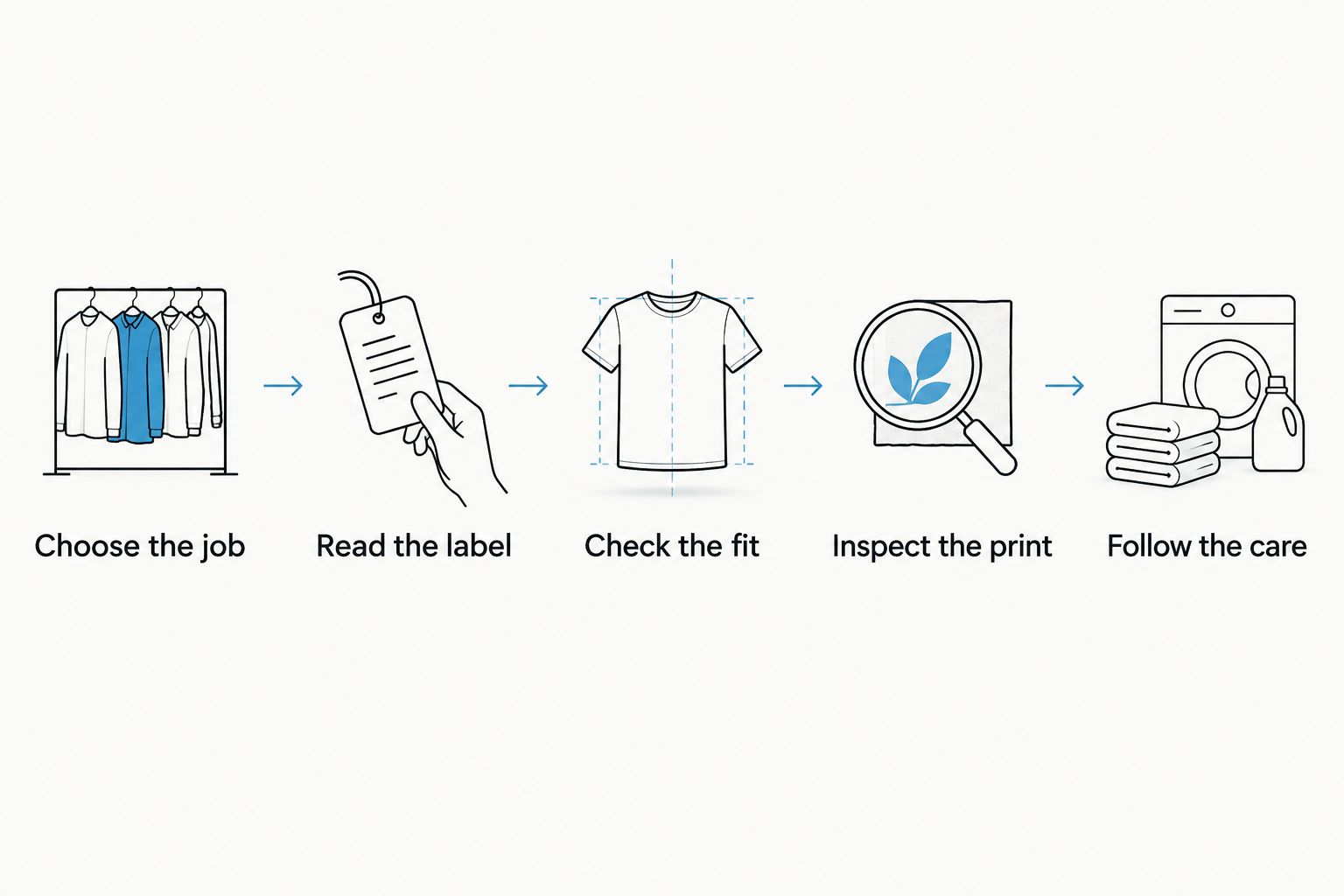
- Choose the job. Decide whether this is mainly a casual tee, a sweaty chore shirt, or something to wear under another layer. Be honest about its main use.
- Read the label. Look for the full composition. A label stating 100% cotton describes an all-cotton fiber composition; 100% polyester describes an all-polyester one.
- Check the fit. Compare the seller's measurements with a tee you already like. Check how the seller measures before comparing widths or lengths.
- Inspect the print. Consider where the graphic sits and how much fabric it covers. A design you love still needs to feel comfortable under your usual layers.
- Follow the care. Read the washing, drying, and ironing instructions before the first wash. Do not substitute a general cotton or polyester rule for the garment label.
For kids, use the same checks without assuming that an adult favorite will suit them. Let them reach, bend, and sit in the shirt when trying it on. A comfortable neckline and freedom to move matter more than winning an argument about fibers.
Does cotton or polyester make the graphic last longer?
Neither cotton nor polyester guarantees a longer-lasting graphic. Print durability also depends on the printing method, its compatibility with the fabric, production quality, and garment care.
Cotton accepts several common printing methods. Polyester can also carry graphics, but it needs a printing process suited to the fabric; some polyester fabrics require attention to dye migration during heat-based printing.
You do not need to identify every printing process before buying a casual tee. You do need to avoid assuming that a familiar fiber makes any graphic indestructible.
Follow the label's instructions about washing, drying, and ironing over decoration. Keep the graphic away from direct ironing unless the garment's directions specifically allow it.
Which western graphic tee fits your style?
The Good Shepherd Ranch Clothing Co. is best for ranch and rodeo families looking for original western-themed graphic apparel. The shop also carries books and tack, so its focus reaches beyond shirts alone.
The Raised Western Short-Sleeve Unisex T-Shirt is a relevant option from The Good Shepherd Ranch Clothing Co. for buyers drawn to a ranch-country saying. Choose it for that connection, then check its current composition, measurements, and care directions before deciding whether it meets your fabric needs.
The trade-off is straightforward: a graphic's message does not establish quick-drying performance, shrink resistance, or fit. If those qualities decide the purchase, confirm them separately.
Browse The Good Shepherd Ranch Clothing Co. with the same checklist you would use anywhere else. Like the saying, check the shirt, and buy for the way you will wear it.
Is cotton better for a hot day at the rodeo?
Cotton is a reasonable choice for casual rodeo watching when you prefer its feel, but it absorbs sweat and can remain damp. Polyester generally dries faster, while fabric weight, airflow, and fit affect comfort in either fiber.
For a hot-weather purchase in 2026, check the whole garment rather than relying on cotton as shorthand for cool. A tee's fiber label also does not establish a sun-protection rating.
Is polyester better for barn chores?
Polyester is the stronger starting point when faster drying is your main concern during barn chores. It is not automatically the better choice for every chore, every wearer, or every season.
Check the work environment as well as comfort. A western graphic tee is not protective clothing, and neither a cotton label nor a polyester label establishes suitability around machinery, sparks, or other hazards.
Should you buy a blend instead?
A blend is a sensible option when you like the finished shirt and want both fibers in its composition. It is not a guaranteed upgrade over cotton or polyester alone.
For your 2026 shopping list, compare the exact percentages, garment measurements, print, and care directions. If a blend does not solve a problem you actually have, there is no need to choose it just because it sounds like a compromise.
FAQ
Is cotton or polyester better for western graphic tees?
Cotton is the better starting point for casual western graphic tees; polyester is better when faster drying matters most. Fabric construction, fit, print coverage, and care instructions still affect the finished shirt.
Will a cotton western graphic tee shrink?
A cotton western graphic tee can shrink, but the amount depends on its fabric, finishing, and laundry conditions. Follow the garment label rather than assuming every cotton tee changes the same way.
Does a polyester western tee automatically wick sweat?
No. Polyester absorbs less water than cotton, but sweat wicking also depends on fabric construction and finishes. Check the specific shirt's stated features.
Is a cotton-polyester blend better for kids?
A cotton-polyester blend is not automatically better for kids. Choose a shirt with a comfortable feel, suitable measurements, room to move, and care instructions you can follow.
Does polyester keep a western graphic from fading?
Polyester does not guarantee that a western graphic will resist fading. Print method, production quality, fabric compatibility, and care all affect the decoration.
Can I put a western graphic tee in the dryer?
Use the dryer only as the garment's care label allows. Fiber content alone does not tell you which drying conditions are suitable for the fabric and graphic.
Should I size up in a cotton graphic tee?
Do not size up solely because a graphic tee contains cotton. Compare the seller's garment measurements with a shirt you like, and follow any specific fit guidance provided for that item.
One last thing
A shirt that feels cool when dry can feel very different after chores. Next time you wear a favorite tee, notice when it feels good: sitting in the shade, walking the grounds, or cooling down after work.
Make that your final 2026 buying check. Match the next shirt to the conditions you liked, not just to the fiber printed on the tag.